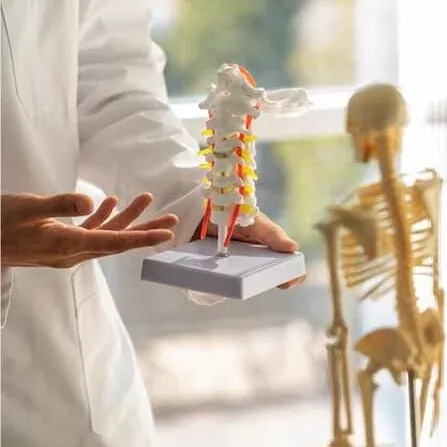
Scoliosis is one of the most common spinal conditions seen in clinical practice, affecting children during periods of rapid growth as well as adults dealing with long-term postural strain, pain, and reduced mobility. Despite being widely known by name, scoliosis is often poorly understood. Many people are unaware they have it until symptoms become obvious, and many more underestimate the consequences of leaving it untreated. A spinal curvature that goes unaddressed does not stay the same – it progresses, placing increasing strain on joints, discs, muscles, and nerves over time.
At our clinic – osteopath London – we assess and treat scoliosis using a combination of hands-on therapy, corrective exercise, and patient education. The earlier a curvature is identified and properly managed, the greater the chance of slowing its progression, reducing symptoms, and in many cases achieving meaningful structural improvement.
What Is Scoliosis?
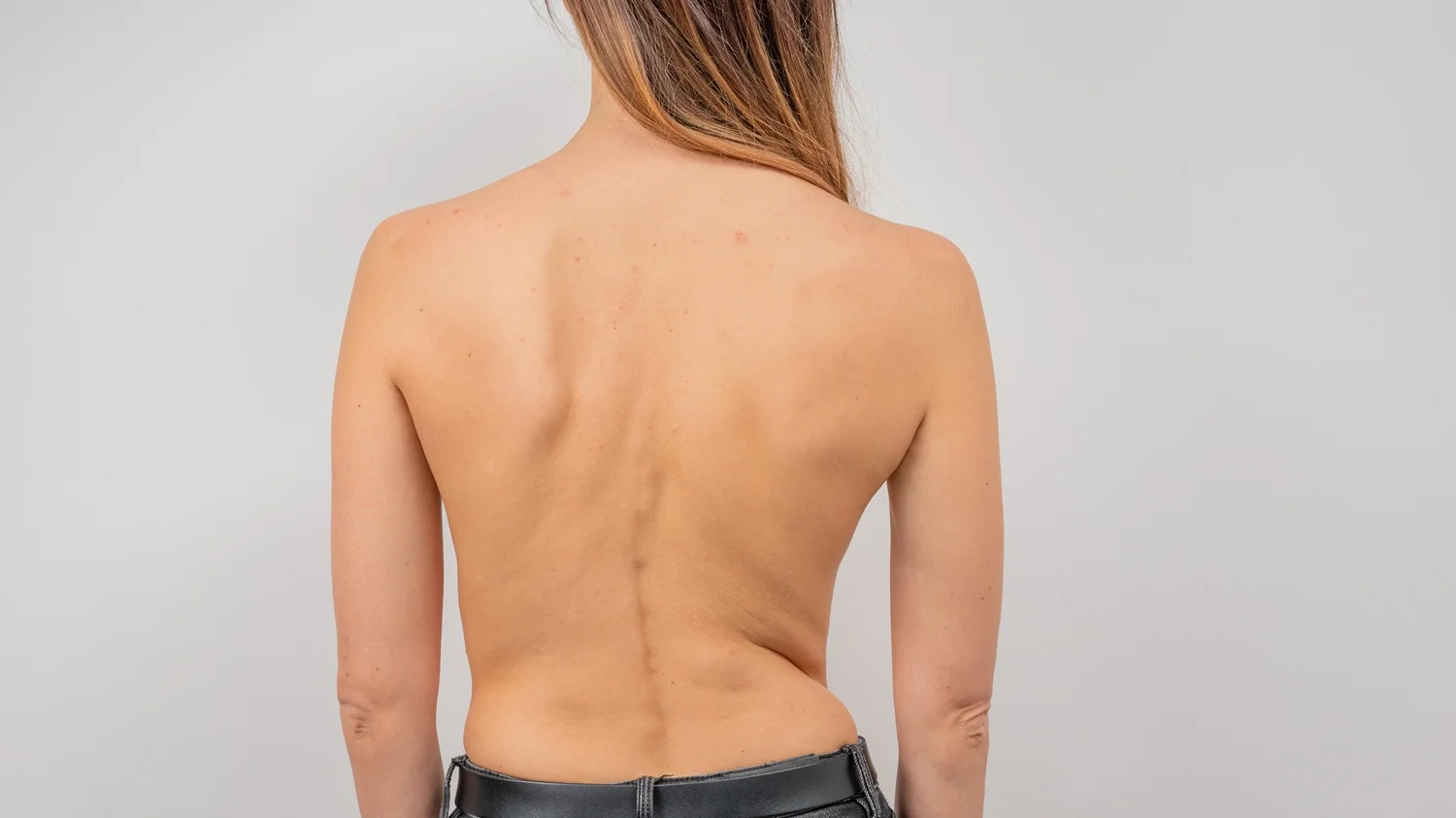
What is scoliosis exactly? It is a lateral curvature of the spine – a progressive structural change that causes the spine to deviate sideways into a “C” or “S” shape when viewed from behind, instead of running straight. But scoliosis is rarely just a sideways bend. In most cases, the vertebrae also rotate around their own axis, and the natural front-to-back curves of the spine – the lordosis in the lower back and the kyphosis in the upper back – may become exaggerated or flattened.
The development of scoliosis is closely linked to an imbalance in the muscles of the trunk. Some muscle groups become too weak, others too tight and shortened. This asymmetry places uneven forces on the spine and gradually pulls it out of alignment. The process can be slow and initially painless, which is one reason scoliosis is often discovered incidentally – during a school screening, a visit to a physiotherapist, or when a patient presents with persistent back pain.
Scoliosis in Children – Why Early Detection Matters
The most common time for scoliosis to develop is during the school years, particularly between the ages of 10 and 16 when growth is most rapid. During these periods, bones can grow faster than the muscles that support them, creating conditions where asymmetry develops more easily. Long hours sitting at a school desk, carrying a heavy bag on one shoulder, lack of regular physical activity, and poor posture during screen time all increase the risk.
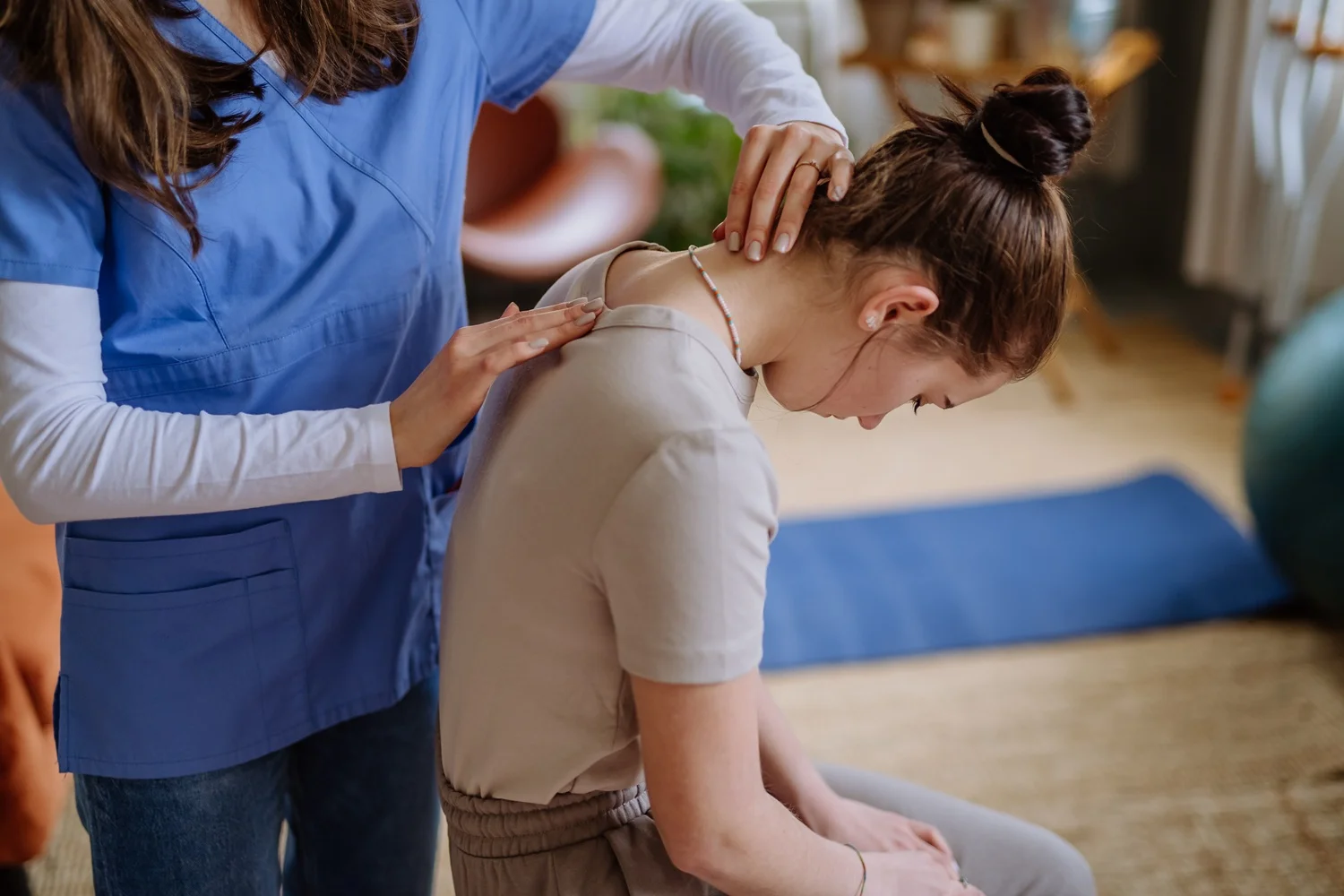
Scoliosis in children can be difficult to spot early because it rarely causes pain in the initial stages. Parents may notice that one shoulder sits higher than the other, one shoulder blade sticks out more prominently, the waistline looks uneven, or the child’s trunk leans to one side when standing. Any of these signs should prompt a professional assessment. Our clinic offers physiotherapy for children London where we carry out detailed postural analysis and evaluate whether a curvature is developing.
Early intervention with individually designed corrective exercises can effectively slow the progression of scoliosis and restore healthier muscle balance around the spine. In the youngest patients – infants and toddlers – postural asymmetries may have their origin in tensions created during birth. In such cases, gentle hands-on techniques can help normalise tissue tension and support healthy motor development.
Scoliosis in Adults – Causes and Characteristics
Scoliosis in adults often represents a continuation of an untreated curvature from adolescence, but it can also develop for the first time later in life as a result of injury, overload, or degenerative change. The main contributing factors in adults include occupational overload, repetitive one-sided movement patterns, prolonged sitting, heavy lifting, and general physical deconditioning.
As the body ages, scoliosis in adults can worsen under the influence of progressive spinal degeneration, weakening of the core stabilising muscles, and loss of tissue elasticity. The asymmetric loading created by the curvature accelerates disc wear and increases the risk of a slipped disc. In more advanced cases, the curvature may compress nerve roots, producing sciatica in the lower limbs or neuralgia with burning, shooting, or electric sensations radiating along the affected nerve pathway.
Adults with scoliosis frequently report chronic lower back pain, rapid fatigue when standing, morning stiffness, and a persistent sense that the body is loaded unevenly. Discomfort may be felt in the lower back, between the shoulder blades, through the neck, or across multiple areas simultaneously.
Scoliosis Symptoms – How to Recognise Spinal Curvature
Recognising scoliosis symptoms early significantly improves treatment outcomes. The signs can range from subtle visual asymmetries to significant pain, stiffness, and functional limitation.
The most common scoliosis symptoms include:
- uneven shoulder height – one shoulder noticeably higher than the other
- asymmetric shoulder blades – one blade more prominent or protruding
- uneven waistline – one side of the trunk appearing more indented
- visible lean of the trunk to one side when standing relaxed
- a rib hump – a raised area on one side of the back visible when bending forward
- apparent leg length difference resulting from pelvic tilt
- rapid fatigue during sitting or standing
- recurring back pain, especially after physical activity or prolonged posture
In more advanced cases, scoliosis symptoms may also include numbness in hands or legs, caused by the curved spinal structures compressing peripheral nerves. Breathing difficulties may develop when the curvature involves the thoracic spine, and digestive issues can occasionally arise from altered trunk mechanics.

Scoliosis Treatment – How We Approach It
Effective scoliosis treatment requires more than a single technique. It demands a thorough assessment, a clear understanding of the type and severity of the curvature, and a combination of therapies that address both the structural and muscular components of the problem.
Our primary goal is always to restore proper muscle balance and improve spinal alignment. In early or moderate cases, significant correction is often achievable. In advanced cases, a major therapeutic success is halting the progression of the curvature and maintaining the improvements gained through treatment. The most important thing to understand is that an untreated spinal curvature always gets worse.
Our scoliosis treatment approach includes several complementary methods:
Manual therapy and spinal work – skilled spinal adjustment near me techniques help restore mobility to restricted spinal segments, decompress overloaded joints, and reduce the muscle tension that holds the spine in its curved position. This is a central element of scoliosis treatment and often provides immediate relief.
Corrective exercise programmes – individually prescribed exercises form the foundation of long-term scoliosis treatment. They strengthen weak muscle groups, lengthen shortened ones, retrain movement patterns, and help maintain the gains achieved through hands-on therapy. For older patients, programmes are adapted to suit individual capacity and goals.
Therapeutic massage – remedial massage London helps release chronic muscle tension associated with scoliosis, improves tissue circulation, and reduces pain. Regular sessions support the postural correction process and enhance recovery between exercise and manual therapy appointments.
Post-injury rehabilitation – when scoliosis has developed or worsened following trauma such as a road traffic accident, fall, or sporting incident, a structured programme of rehabilitation London may be needed to address both the curvature and the injury-related complications simultaneously.
Supportive taping – kinesio taping London can be used as an adjunct to treatment, providing proprioceptive feedback that helps patients maintain improved posture between sessions and during physical activity.
Scoliosis and Related Spinal Conditions
Scoliosis rarely exists in isolation. The asymmetric loading it creates throughout the spine leads to secondary problems over time. Uneven pressure on intervertebral discs accelerates degenerative changes and increases the risk of disc pathology. One-sided overloading of facet joints can trigger localised inflammation and chronic spinal pain.
Patients with scoliosis may also experience impaired lymphatic circulation in the lower limbs as a result of postural imbalance and compression of vessels. In such situations, lymphatic drainage London can support fluid management and reduce feelings of heaviness and swelling in the legs.
It is worth emphasising that scoliosis affects the entire body, not just the spine. Altered trunk biomechanics influence the hips, knees, feet, and even the jaw. This is why our clinic takes a whole-body approach, treating the patient as an interconnected system rather than addressing symptoms in isolation.
Is Scoliosis a Disability?
A question many patients and parents ask is is scoliosis a disability. The answer depends on the severity of the curvature, the symptoms it produces, and the degree to which it limits daily activities. Mild scoliosis typically does not qualify as a disability and can be managed effectively with conservative treatment. Moderate to severe cases that cause significant pain, breathing restriction, neurological symptoms, or functional limitation may be recognised as a disability in certain contexts, including workplace assessments and insurance evaluations.
Regardless of classification, the most important point is that scoliosis at any stage benefits from professional management. Even mild curvatures deserve monitoring and proactive care to prevent progression.
Scoliosis Chiropractor – Can Manual Therapy Help?
Many people search for a scoliosis chiropractor when looking for non-surgical options to manage their curvature. Manual therapy – including chiropractic, osteopathic, and physiotherapy-based approaches – can play a valuable role in scoliosis treatment by restoring joint mobility, reducing pain, and improving the mechanical environment around the spine.
However, lasting improvement in scoliosis requires more than spinal adjustments alone. The best outcomes come from combining skilled manual therapy with a structured corrective exercise programme, postural education, and ongoing monitoring. At our clinic – chiropractic London – we integrate all of these elements into a cohesive treatment plan tailored to the individual patient’s curvature, symptoms, and goals.
Can Scoliosis Be Prevented?
Complete prevention of scoliosis is not always possible, particularly in idiopathic cases (those with no identifiable cause), which account for the majority of curvatures diagnosed in children. However, the risk of development and progression can be significantly reduced through regular postural screening, consistent physical activity, avoidance of one-sided loading habits, good ergonomics at work and school, and early therapeutic intervention at the first signs of asymmetry.
An assessment with an experienced private physiotherapy London practitioner allows posture to be evaluated objectively, early deviations to be identified, and a preventive programme to be started before scoliosis has a chance to become established.
FAQ – Scoliosis
What are 5 symptoms of scoliosis?
The five most common scoliosis symptoms are uneven shoulder height, one shoulder blade more prominent than the other, an asymmetric waistline, a visible lean of the trunk to one side, and a rib hump that appears when bending forward. These signs may be accompanied by back pain, stiffness, and rapid fatigue. In more advanced cases, nerve-related symptoms such as tingling or numbness may also develop.
What can you not do with scoliosis?
With scoliosis, it is important to avoid activities that increase asymmetric loading on the spine. This includes carrying heavy weight on one shoulder, performing high-load rotational exercises without guidance, and maintaining the same sitting position for extended periods. Exercises that have not been individually assessed and approved by a therapist may worsen the curvature. The key is not to avoid all activity, but to ensure that physical demands are balanced and appropriate for the type of curvature present.
What could cause scoliosis?
The most common form of scoliosis is idiopathic, meaning no single cause has been identified. Contributing factors include muscular imbalance, rapid growth during adolescence, poor postural habits, one-sided loading patterns, and genetic predisposition. In adults, scoliosis can develop or worsen due to spinal degeneration, disc disease, trauma, or prolonged occupational strain. Less commonly, neuromuscular conditions or congenital vertebral abnormalities may be responsible.
Can my scoliosis be fixed?
Whether scoliosis can be fully corrected depends on the severity of the curvature, the patient’s age, and how early treatment begins. In children and adolescents who are still growing, significant improvement is often achievable with consistent therapy and exercise. In adults, the primary goals are usually to stop progression, reduce pain, improve function, and maintain the gains achieved. Early intervention consistently produces better outcomes than years of delay.
What are the red flags of scoliosis?
Red flags in scoliosis include rapid progression of the curvature, onset of neurological symptoms such as numbness, weakness, or loss of coordination, difficulty breathing, severe or worsening pain that does not respond to rest, and curvature that develops suddenly in adulthood without prior history. These signs may indicate more complex underlying pathology and should prompt urgent professional assessment. Any child whose curvature appears to be worsening between check-ups should be seen without delay.